
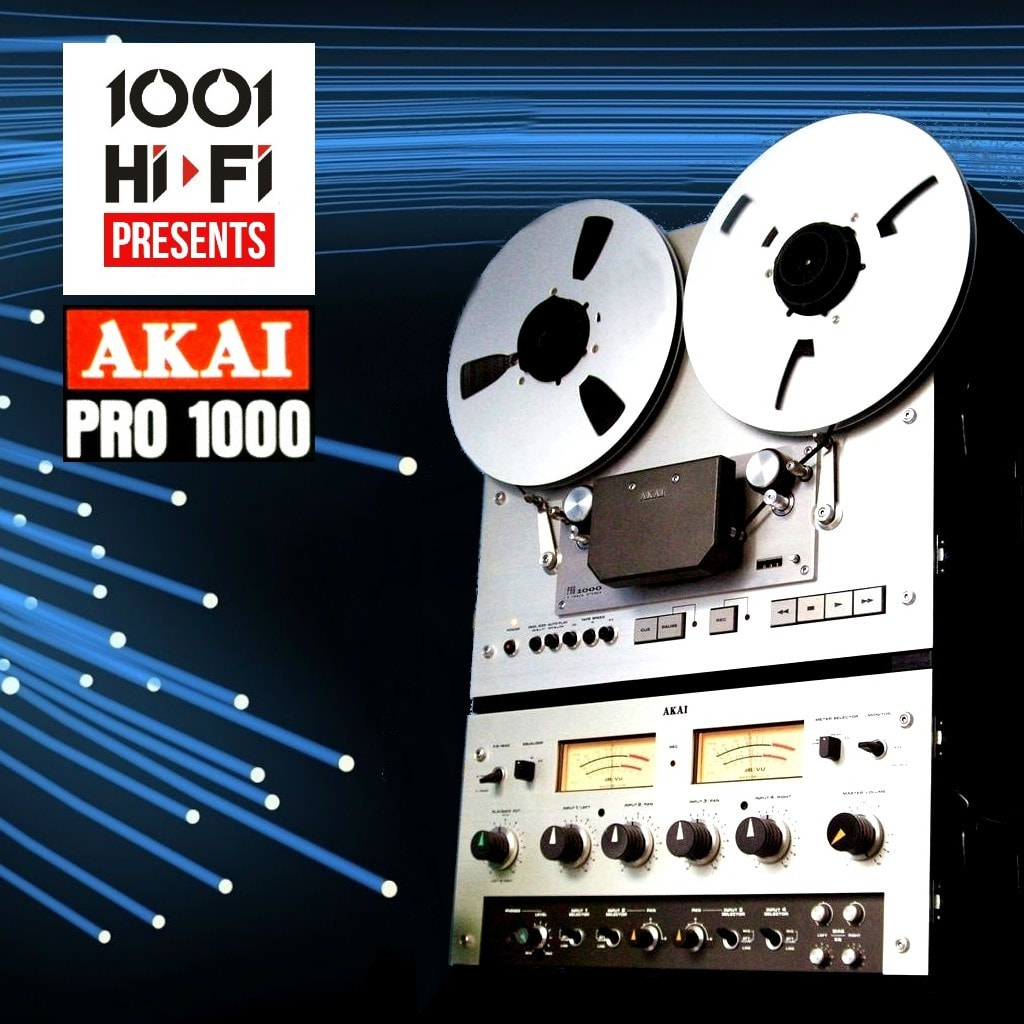
AKAI PRO 1000 (JAPAN 1977)
|
|
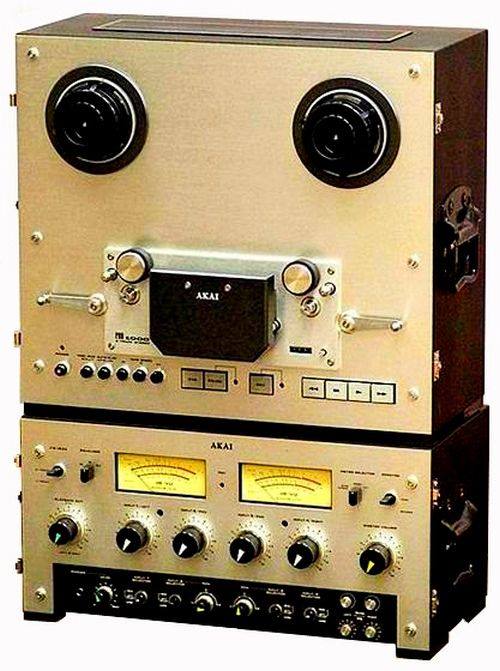
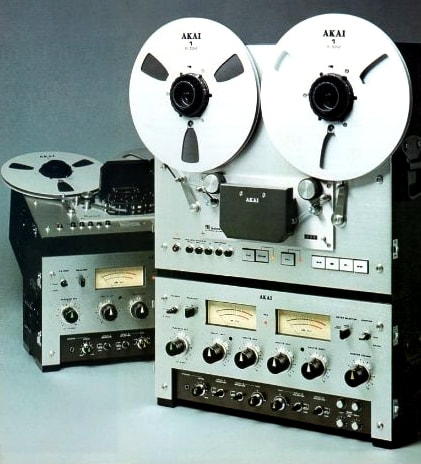
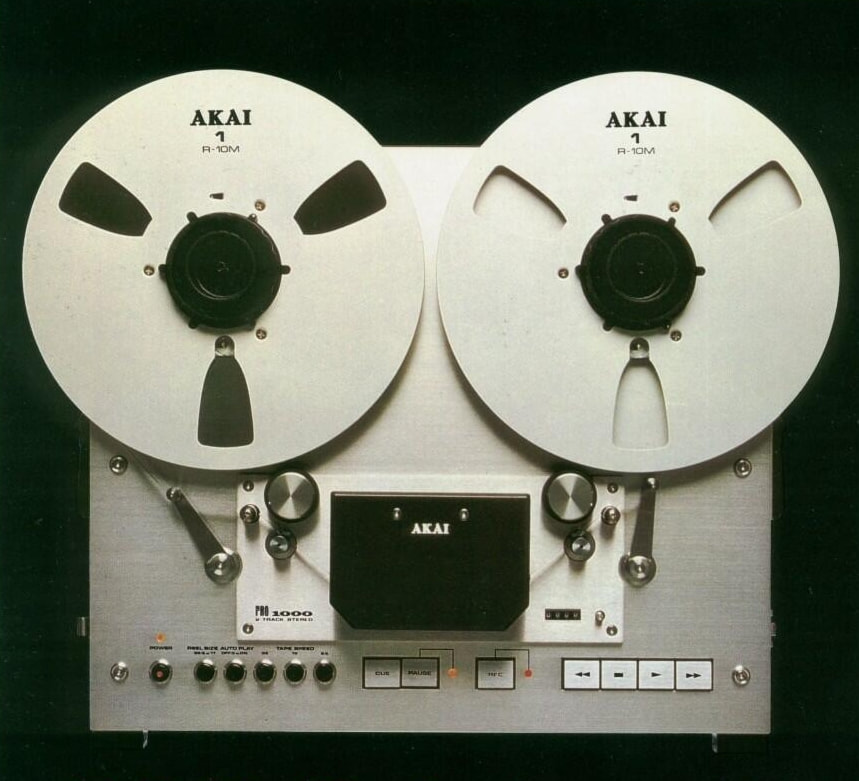
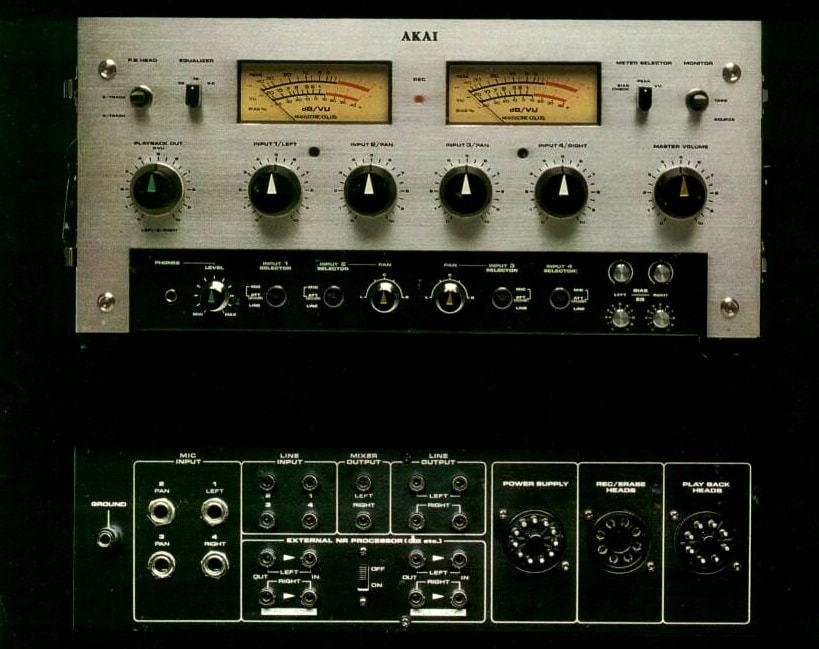
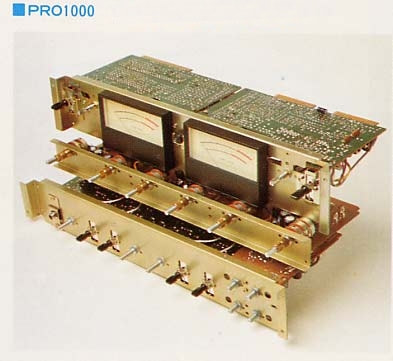
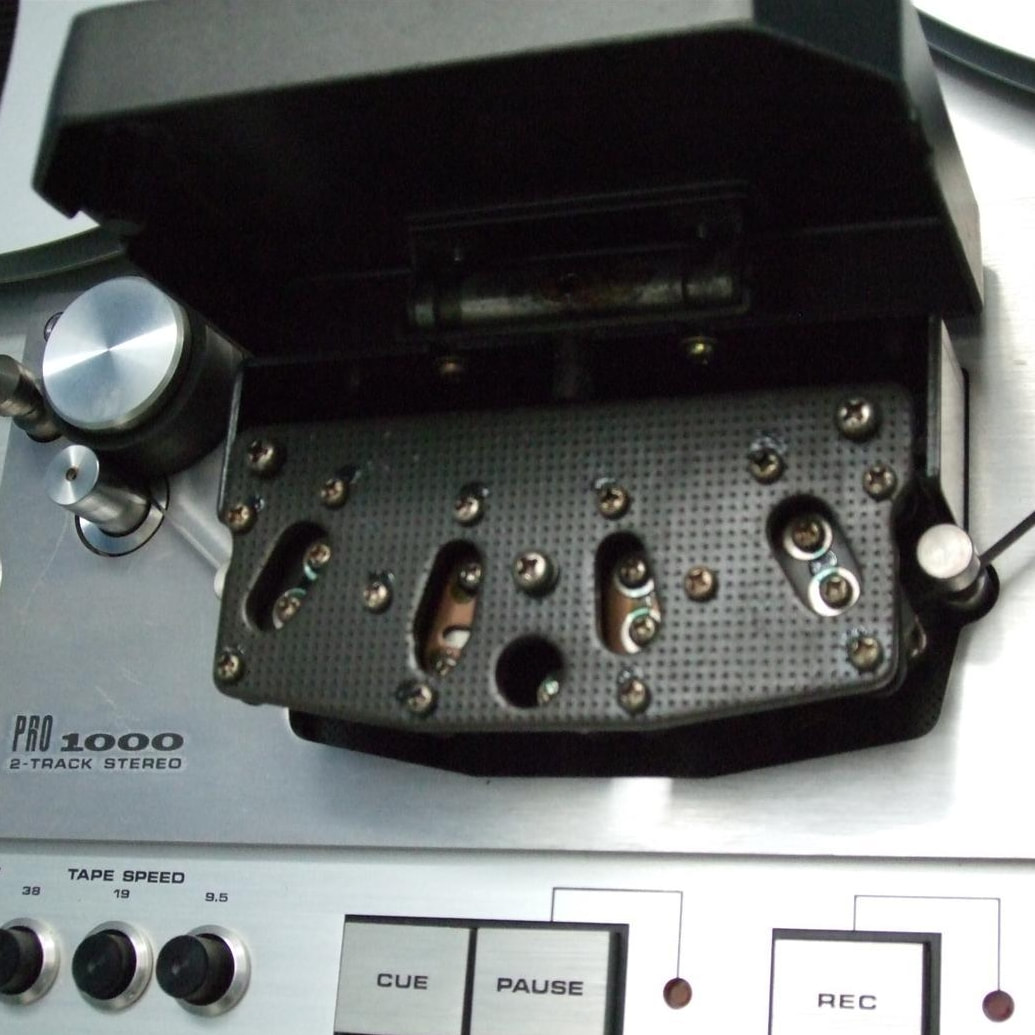
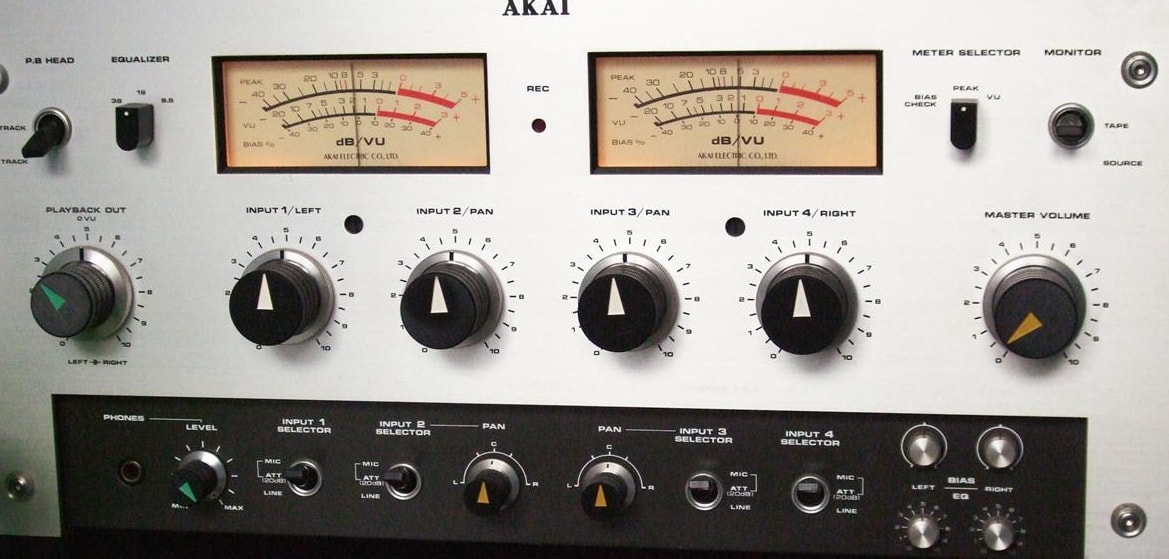
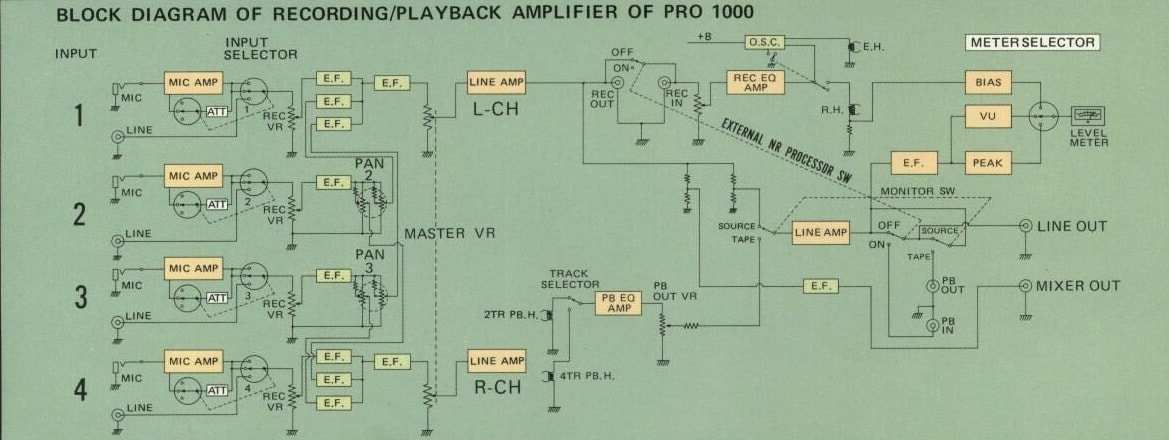
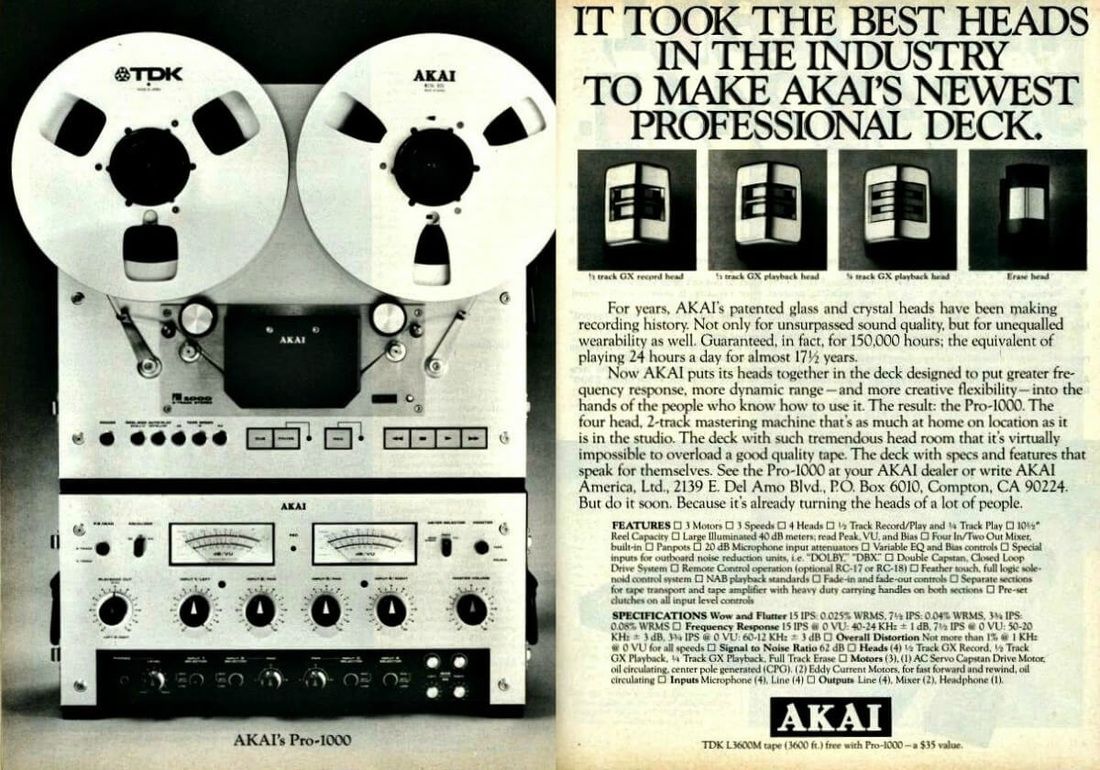
The AKAI PRO 1000 from 1977 is a magnificent two-box rarity with impressive technical specifications that unfortunately didn't sell too well. The AKAI PRO 1000 features a 3-Motor/Double-Capstan tape transport system. For the capstan drive, this system uses an AC servo motor with a built-in CPG (Center Pole Generator) to provide smooth, stable operation while two 6-pole eddy current motors are employed for the left and right reel drives. Due to the high-quality mechanism of this machine, tape speed deviation is +/-0.5% and wow and flutter is 0.025% WRMS at 15 ips. Excellent sound quality can be obtained at either 15 ips, 7-1/1 ips or 3-3/4 ips speed. The AKAI PRO 1000 is a four head, 2-track mastering machine that's as much at home on location as it is in the studio. A 2-track recorder will only record a tape one direction while the tracks are wider for higher quality. For further compatibility the AKAI PRO 1000 features beside the 1/2 track GX record and 1/2 GX playback head a 1/4 track GX playback head for compatibility with tapes recorded on 4 track recorders. Two large meters can be switched between peak level or VU meter but they can also be used as Bias Check display. Setting the meter changeover to Bias Check, the meters will indicate the amount of bias thus making the setting for various tape formulations extremely simple. The standard level (center click-stop) was calibrated to match Scotch #206 tape while the continuous adjustment for bias (+/-40%) brings out the full characteristics of every tape.
Technics RS-1800 (U-76) (1978)
|
|
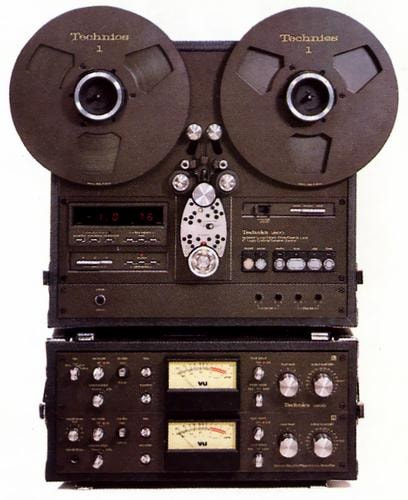
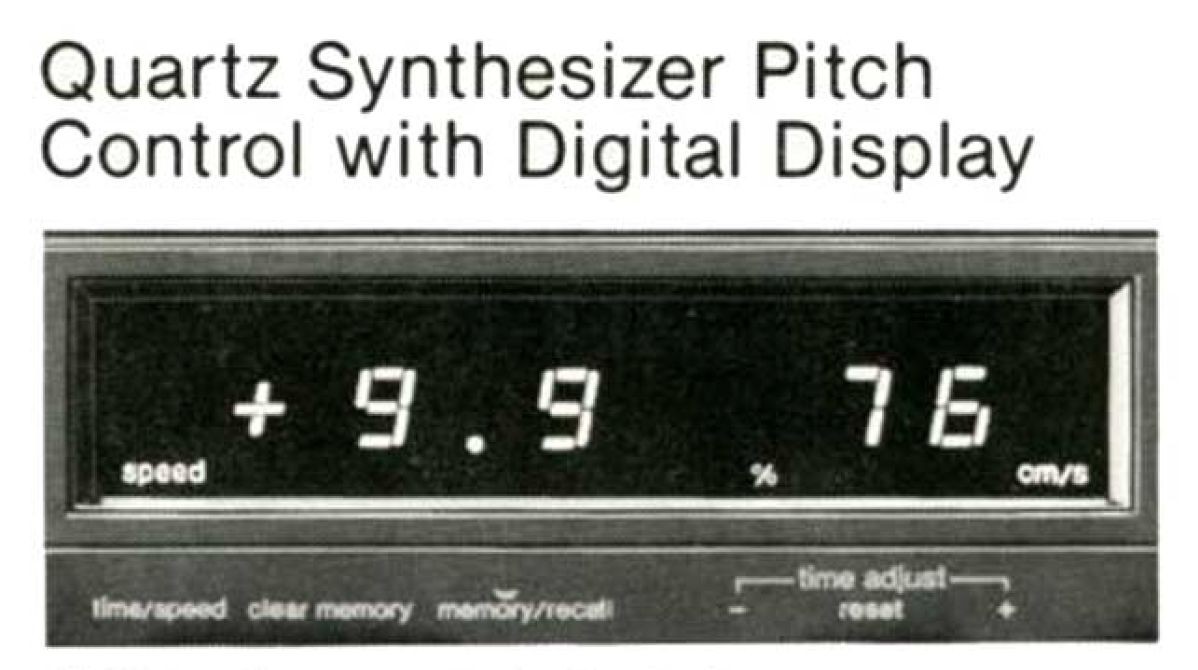
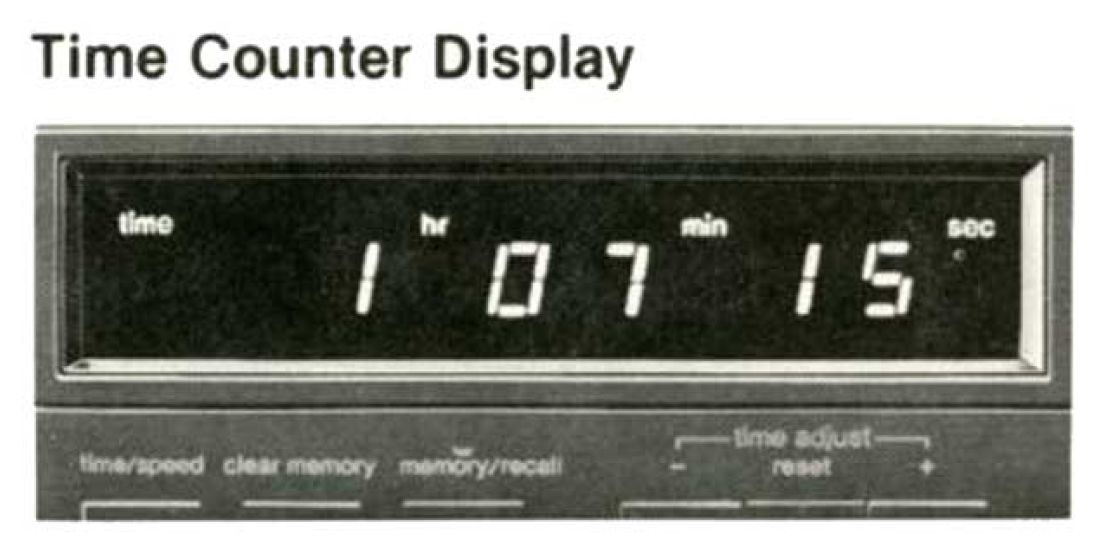
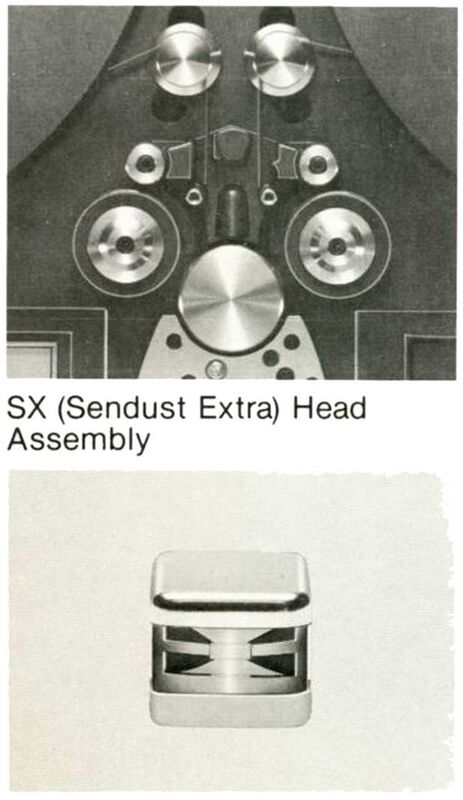
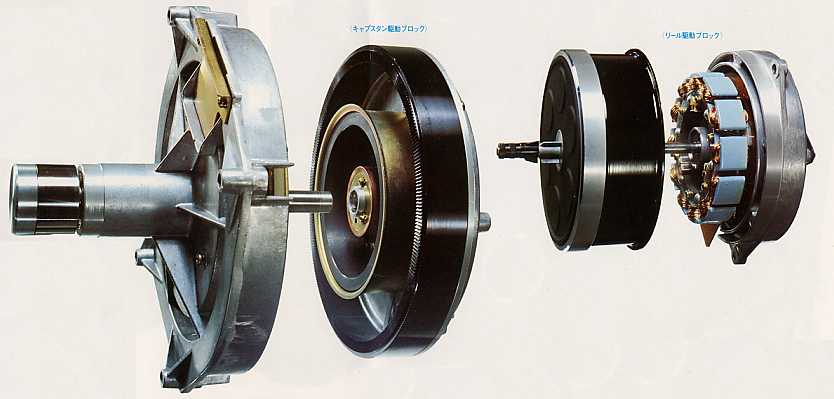
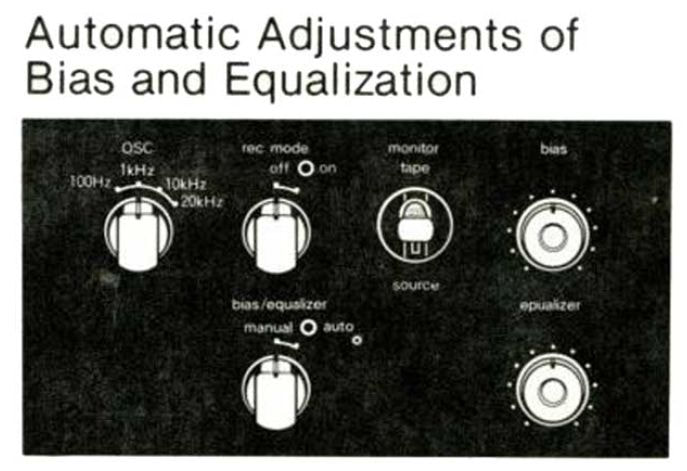
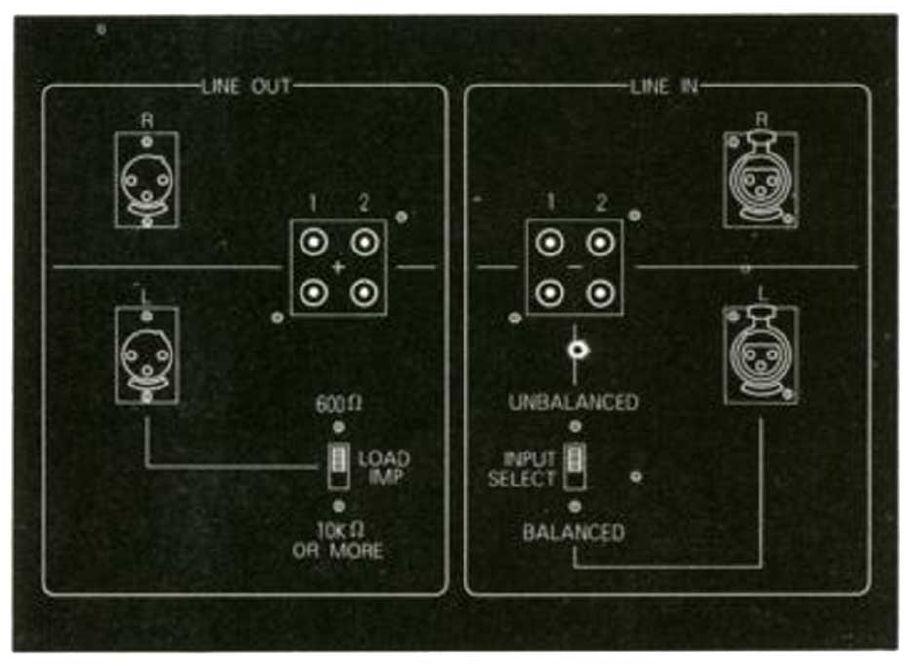
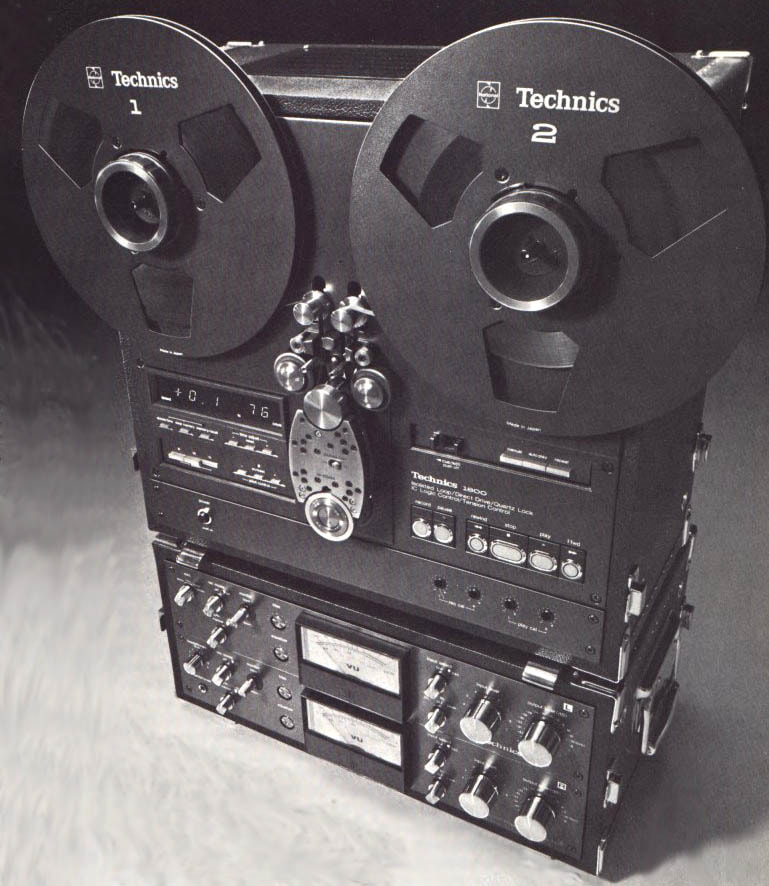
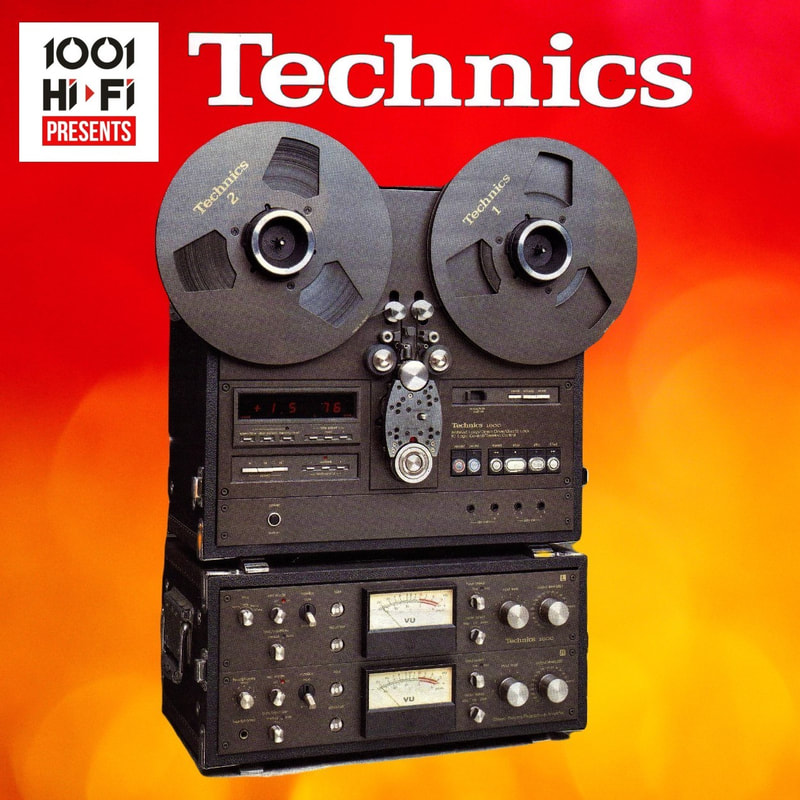
After the introduction of the initial 3 "Isolated Loop" models (RS-1500/1506/1700) Technics decided to create the Ultimate Isolated Loop model, this was the RS-1800 (U-76 in Japan). With this new model Technics added a new tape speed - 76 cm/s (30 ips). The RS-1800 has 3-speed operation capability: 76 cm/s. 38 cm/s and 19 cm/s and can be used for 2-track recording/playback and for 4-track playback. The faster tape speed is also beneficial from the point of view of tape transport stability: wow and flutter of less than 0.010% WRMS (0.02% DIN) and tape speed deviation of less than +/-0.08% at 76 cm/s. Such high-performance specifications as these are, quite naturally, supported by the 3-motor Direct Drive system used since the RS-1500, a Quartz-Locked capstan motor and dual reel motors with a tape tension control system. The RS-1800 also features pitch control with quartz-locked accuracy at all setting that are Digitally displayed by LED's, together with, at the same time, rated speed setting. The same display will also show elapsed tape transport time indicated in hours, minutes and seconds. The "Auto-Play" function is especially convenient to playback a master tape, which is usually wound up when it "tails out". In order to obtain the maximum potential from the extended high-frequency response of the 76 cm/s tape speed, the 2-track recording head, the 2-track playback head and the 4-track playback head of the RS-1800 use the SX (Sendust Extra) type of head. The RS-1800 is a two-box unit where the upper section contains the tape transport while the lower box is the amplifier unit. The unique feature of the amplifier unit, and the most practical feature as well, is this capability for automatic adjustment of bias and equalization. If the bias/equalization selector is set to "auto" position during tape movement in recording mode, the LED lamp illuminates in red, a 1 kHz test tone is generated and the automatic adjustment of the bias begins. After about 15 seconds the equalization is then automatically adjusted, and the lamp flickers during this period. When both of these adjustments have been completed, the color of the LED will change to green. This setting will be retained in the memory, even if the power is turned off, until the selector is set to the "manual" position. An oscillator is also provided separately for manual adjustments which can be made in 4 steps. The playback equalizer is adjusted to conform to NAB standards, but there is also a 2-position selector on the rear panel of the transport unit for IEC standards. Technical specifications: Wow and flutter: 0.01% WRMS at 76 cm/s | Frequency response: 30-35.000 Hz (+/-3 dB 76 cm/s) - 30-30.000 Hz (38 cm/s) - 30-25.000 Hz (19 cm/s) | Signal-to-noise ratio 62 dB at 76 cm/s | Transport: 500x443x347 mm / 36kg | Amplifier: 500x223x389 / 16.6kg. | Original sale Price: 15.000 DM in Germany, 950.000 Yen in Japan. (Optional RP-070 infrared remote control.)